CONSERVE HELIUM
An Essential Resource for All Generations
APPLICATIONS · EVIDENCE · HELIUM STEWARDSHIP
Balloons That Carry Science
Scientific balloons lift instruments into the stratosphere. Their purpose, design and helium use deserve a separate conservation assessment.
Understand the role
Identify what helium does in this application.
Ask what can be conserved
Match the evidence to the actual process.
Preserve helium’s service to humanity.
Applications
On this page · A laboratory above much of the atmosphere · A measured fill that expands during ascent · Zero-pressure and super-pressure designs · A purpose-specific conservation review
A laboratory above much of the atmosphere
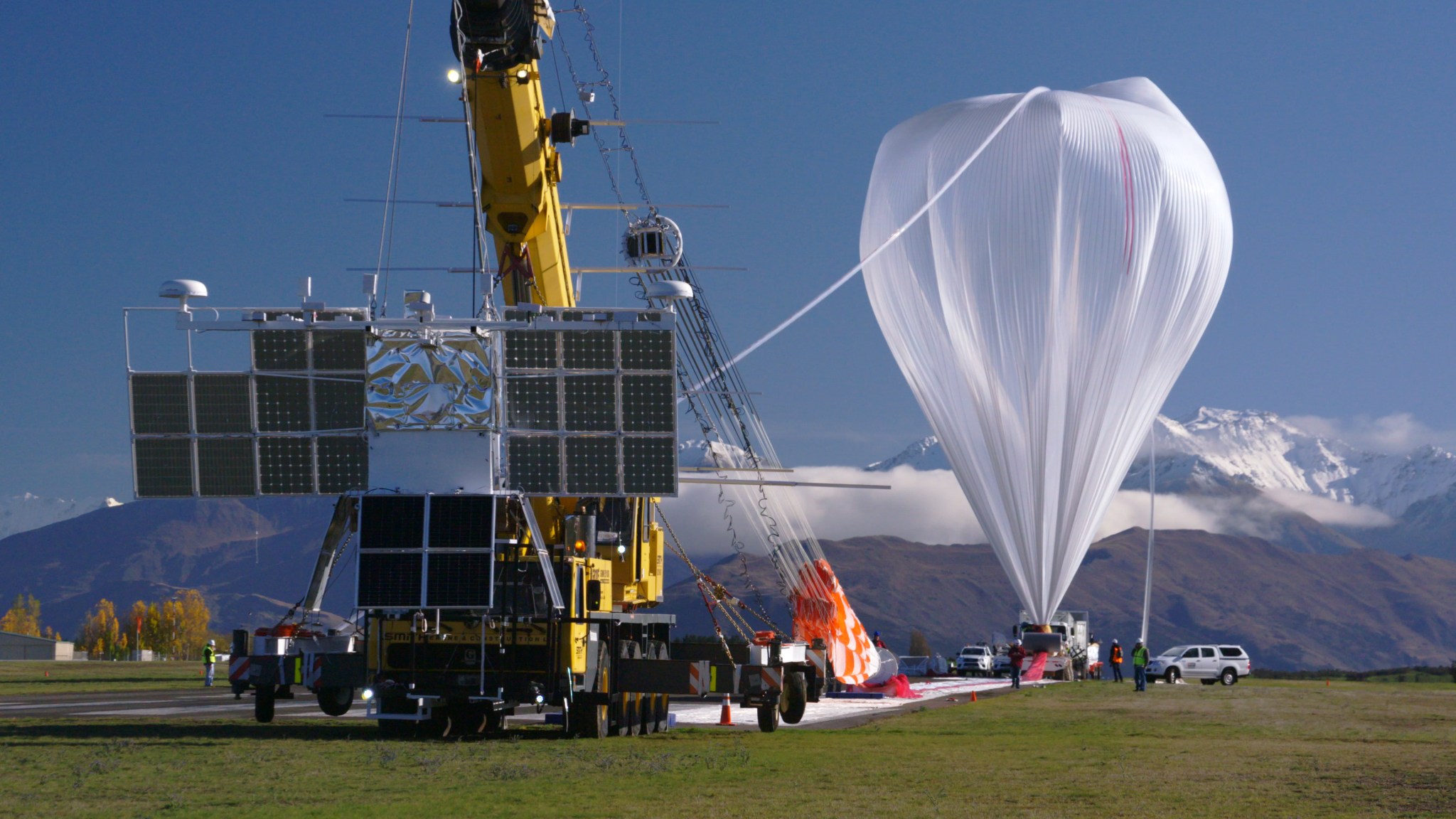
NASA’s Scientific Balloon Program provides high-altitude platforms for scientific investigations and technology demonstrations. Payloads can study Earth, the solar system and the wider universe.
These missions can also test instruments and train scientists and engineers. Their value should be examined through the knowledge or capability produced, rather than grouped indiscriminately with disposable decorations.
Sources: Scientific Balloons Overview [S110]
A measured fill that expands during ascent
NASA explains that a scientific balloon is not completely inflated on the ground. A measured helium fill supplies lift, and the gas expands as surrounding pressure falls during ascent.
The balloon, instruments and supporting equipment form one lifting system. Gas quantity and envelope design have to match the mission; a large volume visible at altitude does not represent that same gas volume at ground conditions.
Sources: Scientific Balloon FAQs [S111]
Zero-pressure and super-pressure designs
NASA distinguishes zero-pressure balloons, which can vent helium as they warm, from super-pressure balloons that retain the gas while internal pressure changes.
Reduced in-flight venting is not the same as recovering all helium when a mission ends. Likewise, recovering a scientific payload does not establish recovery of its lifting gas. The relevant boundary is the complete mission.
Sources: Scientific Balloon FAQs [S111]
A purpose-specific conservation review
Conserve Helium proposes asking what observations the mission uniquely enables, how much helium it needs, what losses occur, and whether another platform or approved lifting-gas option could perform the work.
The aim is to make the tradeoff visible. Scientific purpose deserves recognition, while design improvements and avoidable loss still deserve scrutiny. The same questions should be asked consistently across public and private missions.
Continue exploring
Finding the Invisible Leak
The Helium Behind Fiber-Optic Communications
The Laboratory’s Carrier Gas
Colder Than Liquid Helium: Quantum Research
Helium and Fusion Research
Helium in Welding and Metal Fabrication
A Helium Recovery Handbook
Sources: Scientific Balloons Overview [S110] · Scientific Balloon FAQs [S111]
Reviewed October 24, 2026. Technical examples are scoped to the cited source; proposed conservation questions express Conserve Helium’s recommendations.

