
CONSERVE HELIUM
An Essential Resource for All Generations
MEDICAL IMAGING · SUPERCONDUCTIVITY · CONSERVATION
MRI, Superconducting Magnets & Helium
Liquid helium has helped make powerful medical imaging possible. Better cooling and recovery can preserve that service for future patients.
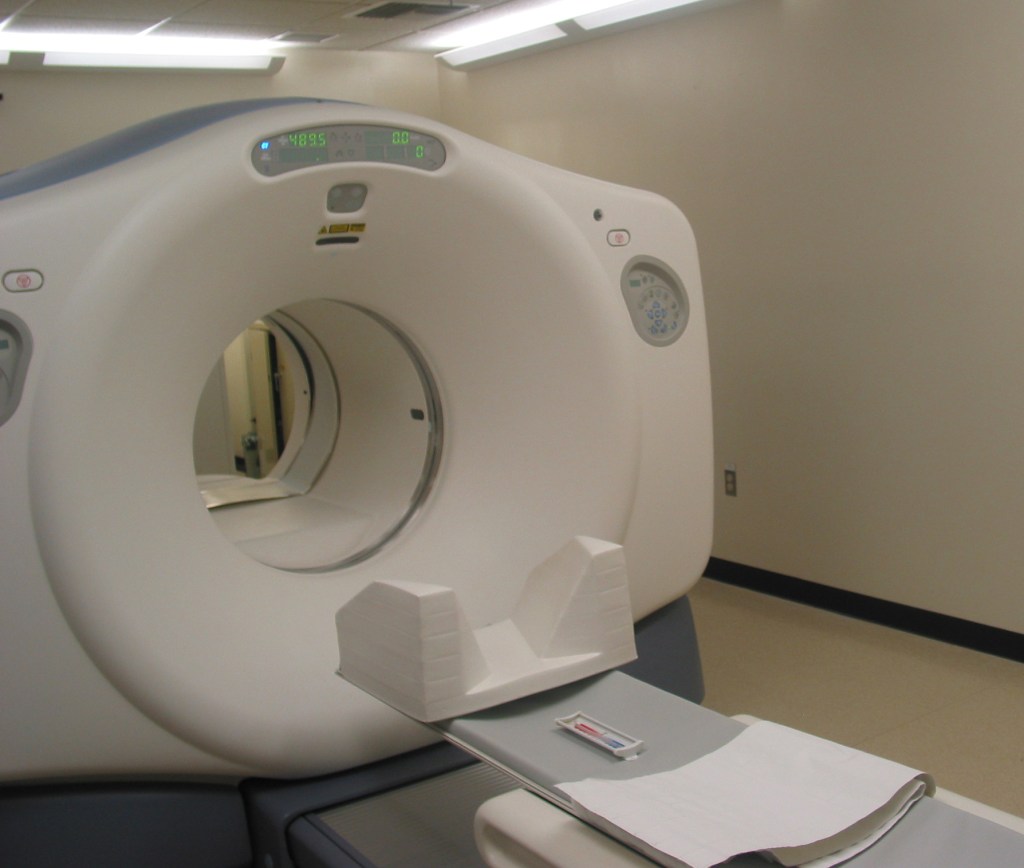
MRI scanner. General application image; no particular magnet specification is implied. NIH / NIBIB.
Applications / MRI
On this page · How MRI builds an image · Why superconducting magnets matter · Where helium does its work · Three ways to manage helium · What “low-helium” means · Quench and patient safety · Conserve helium, preserve imaging
How MRI builds an image
MRI uses a strong magnetic field, radiofrequency pulses and sensitive receivers to detect signals from hydrogen nuclei in the body. Differences in tissue composition and how magnetization recovers help create contrast in the final image.
- Establish the magnetic field. Hydrogen nuclei respond to the main field, creating a small net magnetization.
- Apply radiofrequency pulses. The pulses temporarily change that magnetization.
- Encode location. Gradient coils create controlled variations in the field to identify where signals originate.
- Receive and reconstruct. Receiver coils detect the signals, and a computer turns the encoded measurements into images.
MRI is especially useful for examining the brain, spinal cord, muscles, ligaments and other soft tissues. It supports diagnosis and treatment monitoring without the ionizing radiation used by x-rays and CT. The appropriate examination depends on the clinical question.
Sources: NIH / NIBIB [S65] · Siemens MR training [S71] · FDA [S70]
Why superconducting magnets matter
An electromagnet produces a magnetic field when electrical current flows through a coil. In superconducting wire, direct current can flow without electrical resistance when the material remains within its superconducting operating limits. Very high currents make powerful magnets possible.
Niobium-titanium alloy is widely used for MRI magnet wire. Conventional systems keep these conductors near 4.2 kelvin, about −269°C. The cooling equipment, gradient coils, electronics and other scanner systems still require electricity.
Some MRI systems use permanent magnets instead. This page focuses on superconducting systems, where helium has played a major role.
Sources: DOE [S66] · NIST [S67] · FDA-hosted device summary [S72]
Where helium does its work
In a conventional bath-cooled magnet, superconducting coils sit in a vessel of liquid helium inside a cryostat—an insulated enclosure. A vacuum space and thermal shields reduce incoming heat. The patient lies in the central opening, separated from the magnet’s cryogenic equipment.
Liquid helium absorbs heat entering the cold system. Some of it can become gas while maintaining the low temperature required by the magnet. A cryocooler can remove that heat and condense the gas back into liquid.
Helium is a coolant in the magnet. Its role is separate from MRI contrast agents, which may be administered for particular examinations.
Sources: Philips technical white paper, pages 4–5 [S68] · NIST refrigeration review [S59] · FDA [S70]
Three ways to manage helium
| Design | Cooling approach | Conservation question |
|---|---|---|
| Helium bath | A substantial liquid inventory cools the coils. | How much escapes during operation, transfers and servicing? |
| Zero boil-off bath | A cryocooler recondenses helium vapor inside the magnet. | How are refrigeration interruptions and service losses managed? |
| Sealed low-helium system | A small enclosed helium inventory works with specialized cooling equipment. | What inventory, service conditions and retirement arrangements apply to this model? |
Zero boil-off describes normal operation under the specified cooling conditions. It does not guarantee that no helium will ever be lost. Power and cooling-water interruptions, maintenance and other events depend on the system’s design.
Sources: Philips technical white paper [S68] · NIST [S59]
What “low-helium” means
Philips describes BlueSeal magnets with a sealed 7-liter helium inventory. Siemens Healthineers describes DryCool systems with 0.7 liters and no routine helium refills. These are manufacturer descriptions of particular technologies, rather than specifications for every MRI scanner.
Inventory and consumption are different measurements. The amount held inside a magnet is not the amount it consumes annually. A larger bath with effective recondensation may require little replacement in normal operation. Compare servicing, downtime and end-of-life recovery as well as the initial fill.
“Helium-free operations” can describe a system that still contains helium. The exact model’s technical documentation should explain what is sealed, what requires maintenance and what happens during an interruption.
Sources: Philips [S45] · Siemens DryCool [S69]
Quench and patient safety
A quench is a rapid loss of superconductivity. Energy stored in the magnet becomes heat, and conventional bath systems can rapidly boil helium. Engineered pressure relief and venting protect the equipment and occupied spaces. The behavior of a sealed system is design-specific.
The magnetic field, changing gradient fields and radiofrequency energy also require careful patient and equipment screening. Implants must be positively identified as MR Safe or MR Conditional for the proposed scanning conditions. The imaging team determines suitability and follows the device’s instructions.
Sources: Philips technical account [S68] · FDA [S70]
Conserve helium, preserve imaging
Conserve Helium advocates preserving this finite resource for work that serves humanity. For hospitals and imaging centers, a useful conservation review includes the helium inventory, replacement purchases, service losses, reliability of refrigeration and recovery when a magnet is retired.
Our proposed approach is to measure losses over a stated period, compare technically suitable systems on a consistent basis, and arrange recovery with qualified service providers. A small inventory alone does not describe the full operating history of a scanner.
Explore practical conservation · Return to helium applications · Read our sources and methods

